Yes, it can. A standard pressure washer aimed at an asphalt shingle roof can strip the protective granules, bruise the shingle and push water under the roofing. The roof may look cleaner on the day, and then wear out years sooner than it should. Soft washing, which uses low pressure and a cleaning solution, removes black streaks without that damage. Here is how the harm happens, what it looks like, and what to ask before you hire anyone.
How does high pressure damage asphalt shingles?
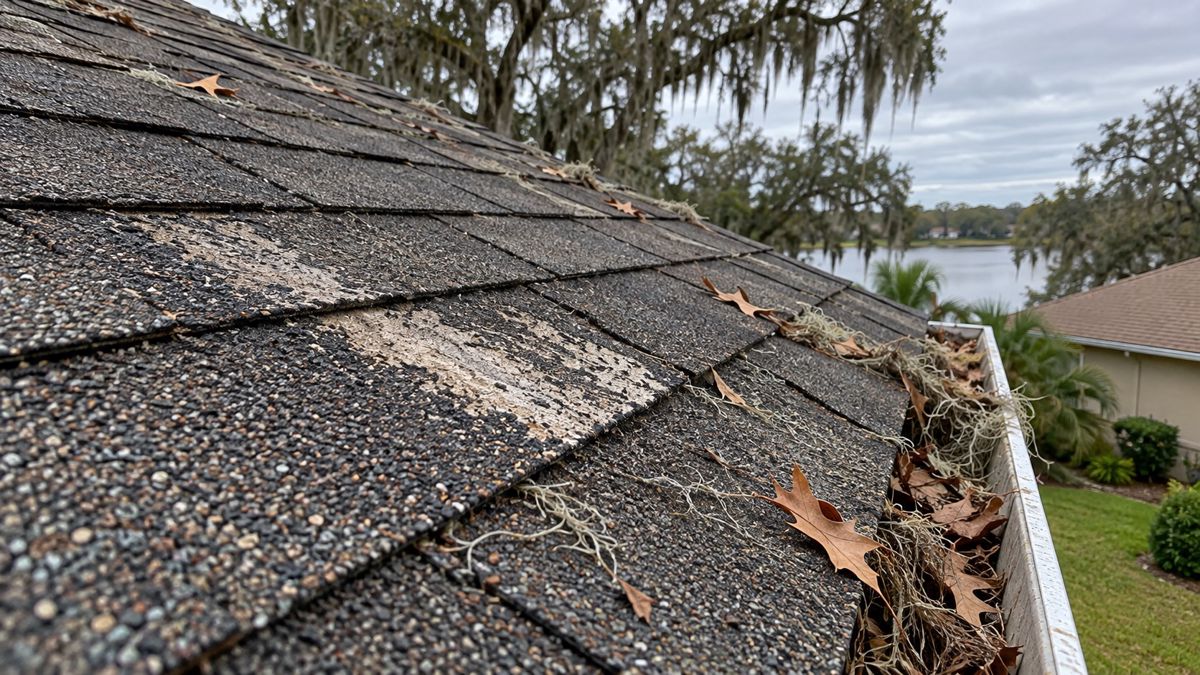
An asphalt shingle is a fiberglass mat coated with asphalt and topped with small mineral granules. Those granules are the roof's sunscreen. They shield the asphalt from ultraviolet light and help shed heat.
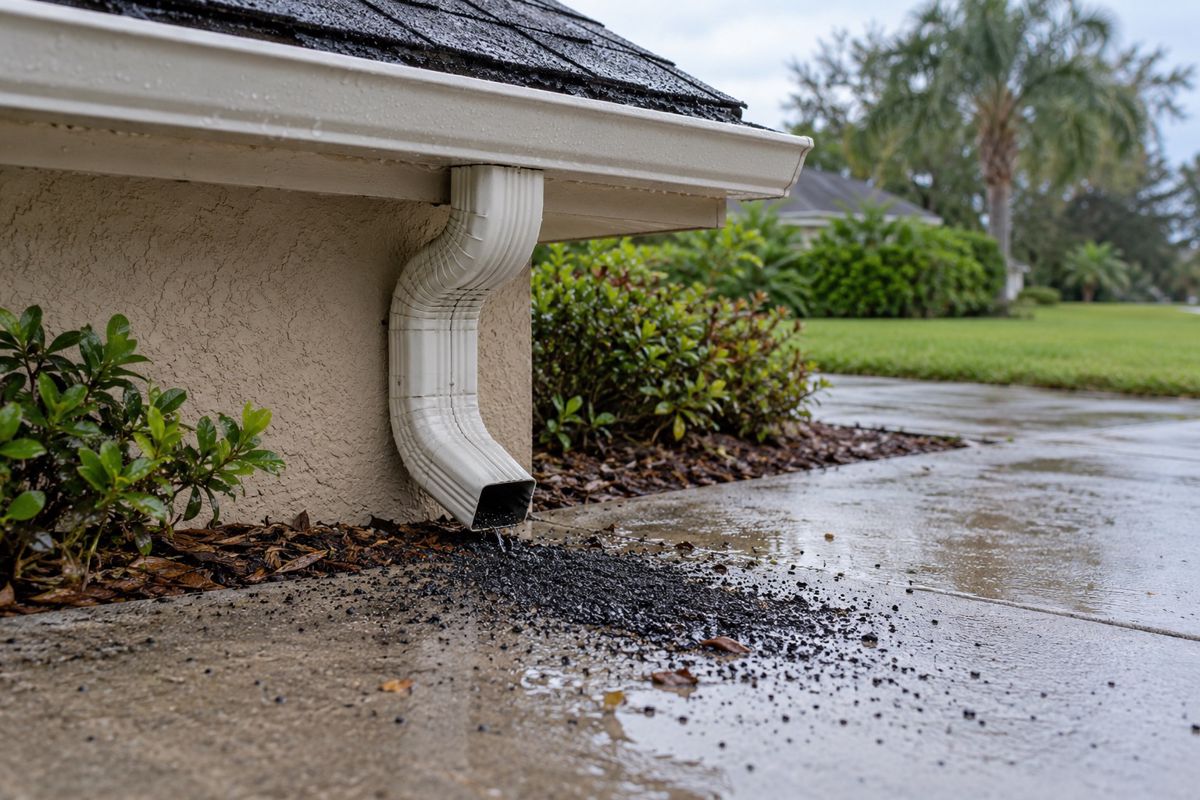
A strong jet knocks granules loose. Once they are gone, the asphalt underneath is exposed to the sun and dries out faster. The shingle becomes brittle, can crack, and loses its ability to shed water. You may notice a lot of gritty black sand in your gutters or at the bottom of downspouts after a heavy wash. A little granule loss is normal with age. A lot of it right after cleaning is a warning sign.
Many pressure washers can run well above 2,000 PSI, and some go much higher. A shingle is not built for that. Even a pass from the wrong angle can leave a pale, scraped stripe that stays visible for the life of the roof.
Why is water forced under shingles such a problem in Florida?
Shingles overlap so that water runs down and off, not into the roof. A pressure washer sprays water up and under that overlap, which is the opposite of how rain should travel. That water can reach the underlayment and the wood decking.
In Florida, roofs already face wind-driven rain, summer storms and the hurricane season that runs from June through November. A roof with soaked decking or a weakened seal strip has less to hold on with when strong winds arrive. Trapped moisture can also lead to mildew in the attic, stains on ceilings and, over time, rot in the wood below.
Sealant strips on shingles are another weak point. Hard water pressure can break the bond between the tabs. A tab that has lost its seal can lift in the wind and let more water in.
What about tile and metal roofs?
Lakeland has many homes with concrete tile roofs, especially in newer subdivisions. Tile is tougher than shingle, but it has its own risks.
- High pressure can erode the surface coating or color layer on concrete tile, leaving it blotchy and more porous.
- Water can be driven under the tiles and into the underlayment.
- Tiles can crack under foot traffic, especially when they are wet and slippery, or when they are old and brittle.
Metal roofs can be scratched or have their coatings damaged, and strong spray can force water into seams and around fasteners. They are less likely to lose granules, but they are not immune to harm.
What is soft washing and how does it clean a roof?
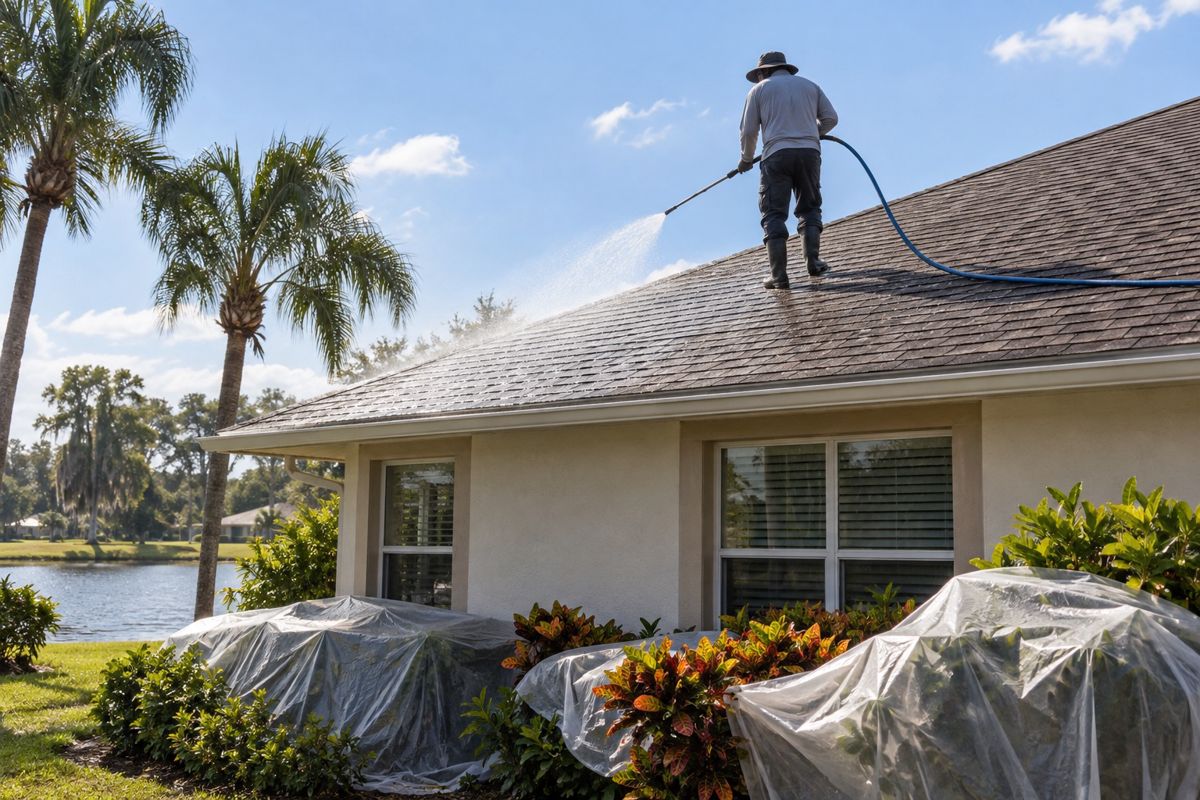
Soft washing is a low-pressure method. Think of the pressure from a garden hose or a bit more, not a jet. The crew applies a cleaning solution that kills the algae, moss or lichen at the root. Then it waits while the solution works, and rinses with gentle water.
The cleaning solution does the hard work, so the roof is not blasted. The streaks often fade within hours and keep fading for days or weeks as rain washes the dead growth away.
A good roof cleaner also protects the property around the roof. They wet your plants before and after, rinse gutters, and keep the spray from going toward windows, vents or open doors. Ask what they use and how they protect landscaping.
What signs show a roof was pressure washed too hard?
Damage is not always obvious on the day. Look for:
- Bald or shiny patches where granules are missing.
- Light stripes or lines in the pattern of the spray.
- Heavy piles of granules in gutters, on the ground or in the downspout outlets.
- Curling, lifting or loose tabs.
- New ceiling stains or damp spots after the next rain.
- Cracked or chipped tiles.
If you see any of these after a wash, take photos and contact a roofer for an assessment. Keep in mind that shingle warranties differ, and many manufacturers advise against high pressure. If you have a warranty, read it, and ask the manufacturer if you are unsure.
How do you choose a roof cleaner you can trust?
You can protect your roof by asking a few plain questions before you agree to anything.
- What method will you use on my roof type, and at what pressure?
- Do you walk on the roof, and how do you protect tile or older shingles?
- How do you protect my plants, pool and gutters?
- Can I see proof of licence and insurance before you start?
- Is your quote in writing, and does it say what is included?
Be wary of anyone who says high pressure is fine for shingles, or who wants to start work without looking at the roof. A low quote is not a bargain if you pay for it with a shorter roof life.
When should you have your Lakeland roof cleaned?
Clean it when you see dark streaks, green patches or moss, rather than waiting for it to look bad. Algae keeps spreading, and a roof under live oaks in Lakeland's humid climate will pick it up quickly. Late spring and fall tend to be practical times, because they fit between the heaviest pollen and the worst of the storm season, but a good crew can work all year if the weather allows.
If your shingles are old, curling or losing granules already, talk to a roofer first. Cleaning does not repair a worn roof, and you should know its condition before work starts.
To learn how our soft wash approach works for shingle, tile and metal, visit our roof cleaning page. You can ask for a written quote there, and we will tell you plainly whether we think your roof is ready for cleaning.